

Wakara (1840s)
More, America: Twenty-Five (More) Founders of the United States of America

Note: This is the eighth in a series of twenty-five new founders of America—one for each decade from the 1770s-2020s—whom I will highlight as part of my series, More, America.
Wakara’s Great Basin
In late-July 1847, Brigham Young’s vanguard company of Mormon pioneers descended what they later named Emigration Canyon into the Salt Lake Valley. Exhausted and starving, the 148 people—143 men, including three enslaved Black men, three women, and two children—believed they had reached a refuge set apart for them by God, and beyond the reaches of the American nation. It was here that, according to legend, the Mormon prophet Brigham Young, declared that this was the “right place to make saints; drive on.”
Young and his followers believed that it was in the American Great Basin—a place they later described as empty and desolate—where the often-persecuted Latter-day Saints could build their American Zion from scratch and in peace. Yet, what they found in the northern Great Basin was a homeland already governed, managed, and defended by a Native American nation, the Utes (Nuche). At the center of this homeland stood the famed Ute leader, Wakara (c.1815-1855).
During the 1840s, Wakara became the most powerful man—Native or non-Native—in the American Southwest. His exploits as the greatest horse thief, purveyor of Indian slaves, and trail blazer, were recounted in newspapers from California to New York and published in best-selling narratives by explorers who mapped and surveyed what would become the American West. Relatedly, the 1840s marked an acceleration of American territorial expansion. “Manifest Destiny” entered the political lexicon. Wagon trains cut grooves across the Plains as pioneers headed to Oregon. In 1846, the United States claimed the Great Basin; in 1848, the Treaty of Guadalupe Hidalgo, ending the U.S.–Mexico War, made that claim official. Glimpses of gold in California drew thousands with promises of riches ready to be ripped from the earth. On American maps, the interior West began to look empty—an open field for settlement and thus the right place for the Mormons, a religious movement in diaspora and disarray ever since the assassination of their founder, Joseph Smith Jr.—to build a permanent refuge between the mountains and ranges of the American Great Basin.
But maps lied—or at least, they were incomplete. Before Mormon settlers planted themselves in the Salt Lake Valley, Wakara had already built an Indigenous empire that spanned what is now Utah, along with parts of Nevada, New Mexico, and California. Wakara was not a footnote to American expansion. He was a rival sovereign—and a founder in his own right. In the very decade Americans congratulated themselves for founding the West, Wakara was shaping its trade routes, directing its settlements, controlling its labor systems, and determining where and how empires could move. The American West was not simply discovered or claimed in the 1840s; it was negotiated with Wakara. His empire of flesh—made up of horses and enslaved Indians—both accelerated settler expansion and constrained it. And even as he used colonial systems to build Indigenous power, he resisted U.S. claims to sovereignty over Ute homelands.
The Geography of Indigenous Power
Wakara was born around 1815 into the Timpanogos band of Utes, whose homelands centered on what is today Utah Lake. Wakara grew up moving seasonally with his band. The winter months Wakara spent as an apprentice raider in southern Utah and northern Mexico, capturing the pedestrian Paiutes and trading them, along with the Utes’ famous pelts, at fairs at Taos, Abiquiu, and Santa Fé. In the spring, Wakara’s Utes chased grass, as Elliot West famously put it, moving north with their horses as the warmer weather pushed out the grasses from the plains. In late spring and early summer, Wakara’s Utes gathered at Utah Lake (Timpanogos Lake) for their annual fish festival, enjoying the bounty of spawning trout, chub, and suckers from one of the greatest fisheries in the West. It was this fishery that defined the Timpanogos Utes as “fish eaters,” which they also carefully managed to ensure there would be enough fish for generations of Utes and fish to come. Other tribal nations, Mexican, and later American trappers and explorers also joined the Utes at the fish festival, trading horses, slaves, and fine pelts. In the late summer and early fall, Wakara’s Utes hunted bison in the southern Great Plains, where they also raided and traded with that region’s great horse nations including the Arapahos, Cheyennes, Shoshones, and Lakotas.
By the early 1830s, New Mexican traders expanded westward in search of prized Spanish horses in California, opening up what would become known as the Old Spanish Trail—the 700-mile crescent trail of trade between northern New Mexico and southern California. But this Old Spanish Trail was really a Ute trail. Wakara and his kin had already been coordinating movements of people, including enslaved Indians, livestock, and goods across the network of trails that would become the Old Spanish Trail, the region’s most important overland trade route. Ute land use created much of the infrastructure later travelers relied upon. Wakara’s Utes widened trails and expanded watering holes, reshaping the environmental and geographical boundaries of the region. These were not improvements carried out for the benefit of Mexican or American travelers. They were modifications made to support expanding Indigenous mobility—including hunter-gatherer seasonal rounds and trade networks.
Wakara’s Trading, Raiding, and Slaving Power
Starting in the early 1840s, Wakara and his cavalry began to dominate trade and raiding along the Old Spanish Trail itself. Their seasonal movements evolved and expanded. At the west end of the trail in early fall and winter, they stole horses by the thousands from the California ranchos. Then by early spring, they ran their bounties east, over high mountain passes and across expansive deserts, to markets in New Mexico. Wakara’s raids earned him the title of “the greatest horse thief in history.” By stretching thin both the human and equine resources of Mexican California in its attempts to defend against his raids, Wakara also contributed to the destabilization—and eventual collapse—of Mexican authority in California.
When U.S. government expeditions began entering the Great Basin in the early 1840s, officers routinely sought Wakara’s guidance to identify the best mountain passes and canyon openings, as well as the most reliable springs. Reports from these expeditions note that Wakara did more than point; he corrected government assumptions, explained seasonal variations, and advised on which routes could sustain horse trains. This knowledge, layered atop earlier Ute, Spanish, and Mexican trails, reshaped the cartography that undergirded American expansion into the Great Basin and southern Utah.
Yet Wakara did not offer his unrivaled knowledge for free. Instead, Wakara often charged tribute both for his help and for permission to cross the Old Spanish Trail itself. Wakara even forced famed (and well-armed) western expeditions, including those led by “the Pathfinder” John C. Frémont, to pay for the privilege of passing along the West’s most vital overland route. This tribute was not merely opportunistic toll collection—it was an expression of sovereignty. Caravans passing through Ute lands were expected to acknowledge Indigenous jurisdiction through gifts and trade.
Wakara may have been famous for his horse raiding and toll collecting along the Old Spanish Trail. But he became feared—and made his sizable fortune—as the greatest trafficker of Indian slaves in the Old West. Wakara enslaved Navajos, Shoshones, Goshutes, and even other Utes. Yet, as was the case for his ancestors, Wakara’s favorite targets were the Paiutes, whose women and children he captured in southwest Utah often during his return trek after a season of horse raiding in California. In those leanest late winter and early spring months, the Paiutes were at their most vulnerable, having eaten up all their winter stores of food. Often, Wakara traded a worn out or injured horse for a Paiute girl. The girl’s parents faced a sort of pioneer-era Sophie’s choice: either give up the girl in exchange for a horse that could feed other children or be killed trying to stop the slavers from taking her by force. Wakara then sold his young, female captives to Spanish colonists and Mexicans at annual slave auctions in Taos and Santa Fe, to ranch owners in California, and to Mormon settlers after they arrived in Utah in the late 1840s.
When Empires Met
Mormon mythology sanctifies July 24, 1847—celebrated as “Pioneer Day” in Utah as a kind of second independence day—as the moment when Brigham Young, gazing over the Salt Lake Valley, declared it “the place” where God would gather the Saints. But the actual history of that decision tells a different story. Based on government-published maps and intelligence, much of it derived from Wakara himself, Mormon leaders initially hoped to settle near Utah Lake—the most fertile and well-watered agricultural zone in the eastern Great Basin. Yet, just before they reached Utah, at his Wyoming outpost, mountain man Jim Bridger reportedly warned the emigrants that if they attempted to plant themselves at Utah Lake, the Utes would drive them out, if they didn’t kill them. The Saints adjusted their plans and designated the Salt Lake Valley as their would-be homeland. In practical terms, then, it wasn’t God who told Brigham Young where to plant the center stake of Zion. It was Wakara’s Utes’ power over Utah Lake that redirected Mormon settlement northward into the Salt Lake Valley, which lay between Ute and Shoshone homelands.
Still, Wakara was happy to have the Mormons, then just a small group of trail-worn pioneers, settle along the foothills of the Wasatch Front. Wakara struck a bargain with Brigham Young: in exchange for Mormon cattle and guns and promises to buy his horses and enslaved Indians, in 1849 and 1850, Wakara personally approved and oversaw the establishment of the first Mormon settlements outside the Salt Lake Valley. Wakara was even baptized into the faith and ordained a Mormon elder. And he began to sell both horses and slaves—in particular, young female ones, many of whom became the plural wives of Mormon men—to the Mormons. Yet it is clear that his participation in the Mormon colonialization of Utah was not borne out of religious fealty. To the contrary, Wakara used the Mormons’ systems of colonialism, commerce, and even religious conversion to expand his own empire. He directed the Mormons to build settlements on the lands of his Ute rivals, whom the Mormons then displaced or massacred, allowing Wakara to consolidate power within the tribe. These settlements also lined his pockets, becoming new nodes on Wakara’s network of markets for his Indian captives and stolen horses.
By 1849, Timpanogos Utes at the lake allowed the Mormons to build a small fort and farm near the eastern shores of the lake. But the Mormons’ numbers increased dramatically. They began to dig up the rich grasslands around the lake to plant their crops and they dirtied up the clear-snowmelt watered streams with their irrigation ditches. Worst of all, their farming methods, which they had developed in the east and Midwest but were poorly adapted to the high-mountain deserts of Utah, failed to produce crops. The starving Mormons began to eat up all the Timpanogos’ fish. By the first months of 1850, the starving Utes, many of who were also sick with measles that the Mormons brought to the basin, began to take Mormon cattle and horses. To the Utes, this was just deserts for sharing their lands with the newcomers. But the Mormons labeled the taking of cattle as theft and “Indian depredations.” Under a territorial “extermination order” that has never been repealed, Young and his fellow Mormon leaders ordered their militia to kill the Timpanogos at the lake. Over several days in early February, the Mormon militia massacred dozens, if not hundreds of the band in and around Utah Lake.
Forgetting Brigham’s Wars
At least initially, Wakara told the Mormons that he was happy that the Timpanogos were killed. A few years before, Wakara had a falling out with his Timpanogos kin; he claimed that they had shot his father in the back while he was smoking a peace pipe. With the band’s leadership gone, Wakara became the Utes’ most powerful tribal member. Brigham Young understood Wakara’s influence. The Mormon leader hoped that conversion and ordination would make Wakara the Mormons’ partner in transforming Ute homelands into Mormon farms and ranches. And Young hoped Wakara would help the Mormons transform Indians—through captivity and conversion—into faithful, obedient Mormon “white” people. But Wakara refused to be Young’s “Lamanite”—the Book of Mormon term for American Indians. Wakara saw himself as Young’s equal, not subordinate. And he was unwilling to throw away his Ute way of life just because Young told him to. After all, that Ute way of life had been working for Wakara’s people for generations older than America itself.
As such, Wakara objected when the Mormons cut off his horse raiding in California and passed laws making it illegal for him to trade in Indian slaves. The Mormons sought to take over the trade themselves, though they called it a new form of benevolent, Christian bondage, through which savage Indians would be made pure, civilized, and obedient. But what really made Wakara furious was that the Mormons, who were pouring in by the thousands to Utah each year, destroyed the Utes’ sacred lands around Utah Lake and ate up all the fish. And they did so with no regard for, and no understanding of, how to carefully manage and harvest those limited resources.
Young and Wakara’s disputes over slaves, horses, and fish came to a head in the summer of 1853. A fish trade between settlers and Wakara’s Utes went bad, resulting in the death of one of Wakara’s kin. That row sparked a series of revenge-motivated violent conflicts, which the Mormons, then later the national press, dubbed “the Walker War",” and which lasted for much of the next year. The Utes, rarely under Wakara’s direct command, attacked Mormon settlements, including those Wakara had helped found just a few years before. Hundreds of settlers were forced to take shelter in Mormon forts. The Mormons massacred an untold number of Utes as well as non-combatant Goshutes. A price was set for Wakara’s head. And Young sent his militia to arrest, or kill the Ute leader. Young also sent letters to Wakara directly, pleading with him to bring his Ute warriors to heel. In one such notorious letter, Young explained that he was sending along some tobacco for Wakara to smoke, which he intimated might or might not be laced with poison. By spring 1854, Young was forced to sue for peace, agreeing to Wakara’s demands that he buy more Indian slaves, supply Wakara with more Mormon cattle, and cease further encroachment into his territory along the Old Spanish Trail.
Six months after the conclusion of the so-called Walker War, Wakara died suddenly on January 29, 1855. The likely cause of death was a communicable disease that the Mormons brought west, though rumors of poison also abounded. Wakara’s burial reminded non-Indians in the area of those burials of the pharaohs of ancient Egypt. In what was the largest (and deadliest) Ute burial ceremony of its kind—befitting Wakara’s stature as the “Napoleon of the Desert”—a dozen of Wakara’s favorite horses, two of his wives, and two Indians slaves were ritually killed and buried alongside the departed leader in his mountainside stone tomb. Another enslaved Indian boy was buried up to his neck outside the tomb, so that scavenging animals would feast on him instead of Wakara and his death party. The boy died a few days later.
Wakara did not stay buried long. In the early 1870s, at the behest of the U.S. Army, which was fighting the “Indian Wars” in the West and the Great Plains, an ethnologist named Henry C. Yarrow dug up Wakara and the remains of the six other people buried with him. Yarrow was hunting for skulls. Discarding the rest of the bones, Yarrow boxed up the crania that he found at Wakara’s burial site alongside dozens of other skulls that he had collected throughout the Great Basin. He then shipped them back to Washington, D.C., for study at the Army’s medical museum. Lost for more than a century, a set of remains was discovered in the early 2000s in the Smithsonian’s collection that fit descriptions of Wakara’s burial. In 2020, in partnership with the Paiute and Ute tribes of Utah, the Smithsonian completed a cultural affiliation study that officially connected the remains to Wakara, making them eligible for repatriation. Yet the multiple tribal claims on the remains, the ethical questions about reburying victims of slavery and slaughter with the man responsible for both, and the fact that the burial site now sits on U.S. Forest Service land accessible to the public make this case of repatriation one of the most complex in the Smithsonian’s history.
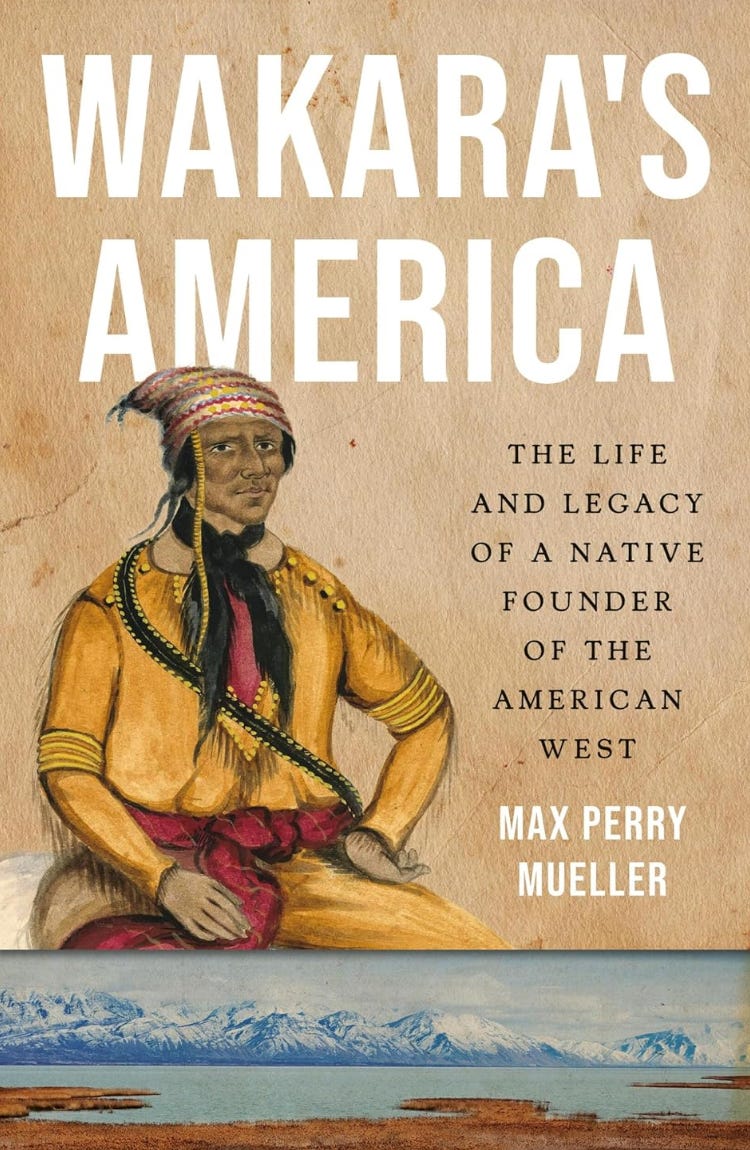
As I’ve recently argued in Wakara’s America: The Life and Legacy of a Native Founder of the American West, during his life, Wakara was a living legend who helped found the American West as we know it today and defended Native sovereignty. And yet, soon after his death, Wakara was forgotten. Forgetting Wakara as a key founder in western colonization and as an anti-colonial warrior is not just a sin of omission. It’s a cover-up. To fulfill the myth of Manifest Destiny, Wakara had to be removed not only from the land, but also from the history books about how the West came to be. Wakara’s life and legacy expose this cover-up. They bring to light a history that the narrators of the mythic origins of the American West have long obscured, ignored, or simply failed to imagine in all of its complexity. It’s a history in which Wakara took advantage of the settler-colonial system to expand his personal wealth and power, in the process making unparalleled contributions to the creation and settling of what is today the American West. It’s also a history in which Wakara fought against settler colonialists when they threatened Ute lives, lands, livelihoods, and Native sovereignty writ large.
The one episode for which Wakara is remembered he had, in reality, little to do with. When Mormon settlers and territorial officials labeled the 1853–54 conflict the “Walker War,” they performed a familiar colonial maneuver: by naming the war after Wakara, they framed it as the eruption of a volatile Native leader rather than as the predictable outcome of settler expansion. The label obscured Mormon provocations—encroachment on Ute lands, interference in established trade and fishing networks, summary executions of Native men by local militias, and escalating efforts to impose settler law over Indigenous sovereignty. Naming the war after Wakara transformed a contest over land, jurisdiction, and power into the story of a single “hostile” Indian, thereby absolving the settlers and their government of initiating and escalating the conflict. In that sense, “Walker War” is not a neutral descriptor; it was an act of narrative sovereignty, fixing blame on an Indigenous leader while normalizing Mormon claims to the Great Basin as defensive and civilizing rather than expansionist and aggressive. To be sure, Wakara had blood on his hands—those of the Paiutes he enslaved, the Utes, Shoshones, and white settlers he killed. “He was a great man, but not a good one,” my friend and elder associated with the Kanosh Band of Paiutes, Rena Pikyavit, has said. And he used violence, or more often, the threat of violence, to expand his own power and influence and protect his people’s lands and waters. For all these reasons, as I argue in Wakara’s America, the Walker War really should be called Brigham’s War. And that war of extermination against all Native peoples began almost as soon as the Mormons entered Utah and lasted until Young’s own death decades later.
Wakara at the Center of the Origin Story of the American West
There are other historical realities to be relearned from restoring Wakara to the center of the history of the American West. First, the West was not an empty wasteland awaiting settlers to arrive and inaugurate history itself. American narratives of the interior West often begin the story of the 1840s with wagon trains full of pioneers, Mormons, and ’49ers. But Wakara’s career—and that of his Ute people—highlights a different starting point. Long before U.S. sovereignty was declared over the Great Basin, Indigenous nations governed and cared for this land. The Mormon arrival in the Salt Lake Valley did not inaugurate American politics in Utah; it altered an existing Native American political order.
The second, more profound lesson is that Wakara’s America is not gone, despite the best efforts of settlers, the settler state, and settler historians. In many ways, it is the American West we see today. What’s more, the key elements of the Native America Wakara defended—his fish, his horses, his own descendants, those of the people he enslaved, and even his physical remains—are not gone. Many are in diaspora, sequestered in far-flung corners of Utah, scattered across the country, or boxed up on dusty shelves at the Smithsonian in Washington, D.C. That diaspora also includes Wakara’s likely thousands of living descendants, many of whom are citizens of tribal nations, but who also include white-presenting Americans with no idea that they descend from the great and notorious Ute leader.
Today, Wakara’s tribal, spiritual, and lineal descendants are leading efforts to end this diaspora and refound the Native American West. They do so by reintroducing Native fish species to their ancestral waters; protecting feral herds of Spanish mustangs and passing on Ute horse culture; preserving the Ute language and sacred histories tied to their homelands; and working to bring Wakara’s remains home. They are also leading efforts to restore Utah’s waterways—especially the Great Salt Lake—before that invaluable water is gone for good, a loss that would trigger economic and environmental catastrophe across the American West.
More, America
The 1840s are usually remembered as a decade of American confidence—a decade when a young republic stretched toward the Pacific and congratulated itself for doing so. Wakara tells a more complex and revealing story. He shows that the West was not a blank canvas but a contested Indigenous world, already structured by trade, diplomacy, and violence.
To call Wakara a founder is not to sanitize his actions. It is to recognize that the making of America was not solely the work of presidents, generals, and pioneers. America was also shaped by Indigenous leaders who defended land, controlled mobility of men women, and forced empires to the bargaining table.
If we are to tell a fuller and more honest story of America’s founding decades, we must acknowledge that in the 1840s the fate of the West did not turn solely on Manifest Destiny. It turned on the calculations of a Ute leader who understood that sovereignty lay not in flags or prophetic proclamations, but in fish management, horse raids, and Indian captivity. It was through these means Wakara governed an Indigenous empire across a vast and ever-changing basin-and-range landscape.
Long before settlers arrived, Wakara’s American West was already “the place” where Indigenous people made themselves and their homelands. And in many ways, it remains that place still.
Who would you choose for the 1850s?
Emma Hale Smith (1804–1879). The religious leader and organizer who preserved Mormonism through schism, insisting on female authority, memory, and continuity in a movement fractured by prophecy, patriarchy, and violence.
Chief Seattle (c. 1786–1866). The Duwamish and Suquamish leader who navigated treaty diplomacy in the Pacific Northwest, asserting Indigenous belonging and sacred land relations as the United States consolidated control after the Oregon Treaty.
Harriet Tubman (c. 1822–1913). The Underground Railroad conductor who turned the geography of the North into a clandestine counter-state, directly undermining the Fugitive Slave Act and redefining American liberty as movement beyond federal law.
Biddy Mason (1818–1891). The formerly enslaved woman who sued for her freedom in California and became a landowner and civic leader in Los Angeles, embodying how Black legal resistance reshaped the social fabric of the far West.
Works on Wakara
Max Perry Mueller. Wakara’s America: The Life and Legacy of a Native Founder of the American West. New York: Basic Books, 2025.
Jared Farmer. On Zion’s Mount: Mormons, Indians, and the American Landscape. Cambridge, MA: Harvard University Press, 2008.
Ned Blackhawk. Violence over the Land: Indians and Empires in the Early American West. Cambridge, MA: Harvard University Press, 2006.
Sondra Jones. Being and Becoming Ute: The Story of an American Indian People. Salt Lake City: University of Utah Press, 2019.